


Healthy Cholesterol: Phytosterols Background and Benefits
BioNutris / 20 Nov, 2022
Phytosterols belong to a class of chemicals known as sterols, which contain over 200 identified members. They are structurally similar to cholesterol, although phytosterols are produced by plants. The primary differences between phytosterols and cholesterol are the carbon side chains and the locations of double carbon bonds. Phytosterols also include stanols, which are saturated sterols that don't have double bonds in the sterol ring. Phytosterols occur naturally in free form as well as bound forms such as esters of glycosides or fatty acids. Free phytosterols are soluble in alcohol and insoluble in water. Pancreatic enzymes in the small intestines can usually break down bound forms of phytosterols. Phytosterols are absorbed by the intestines via several mechanisms. These actions directly compete with the intestinal absorption of cholesterol.
Vegetable oils and their products generally represent the most concentrated dietary sources of phytosterols, especially nut oils. However, less concentrated sources such as cereal grains, fruits and vegetables typically account for the majority of phystosterol intake in humans. The daily intake of phytosterols is typically between 150 mg and 450 mg per day, depending on diet. Some vegetarian diets provide up to 700 mg of phytosterols per day. Beta-sitosterol is one of the most abundant naturally occurring phytosterols, and it typically accounts for about 65 percent of the dietary intake of phytosterols in humans. Campesterol accounts for about 30 percent of phytosterol intake and stigmasterol comprises the majority of the remainder. Beta-sitosterol is also the primary phytosterol used in health supplements.
Uses of Phytosterols
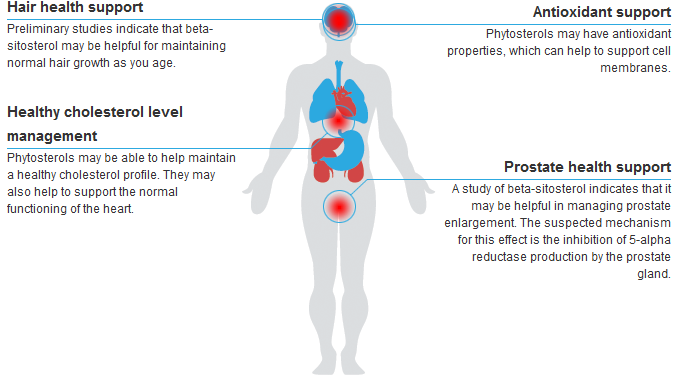
The management of cholesterol levels is the most common reason for taking phytosterol. Additional health benefits of phytosterols include the support of prostate health, hair growth and antioxidant activity.
Signs You May Need Phytosterols
Age-related declines in cognitive function are generally the most significant signs that you may need phosphatidyl l-serine supplements. These signs primarily include problems with memory, mood, language skills and attention span. Children who exhibit hyperactive behavior and have difficulty concentrating may also benefit from phosphatidyl l-serine, along with ahletes who experience muscle soreness.
Phytosterols are effective in lowering cholesterol if you eat enough of them as part of a heart-healthy diet low in saturated fat and cholesterol. Studies have shown that a daily diet that contains 2 grams of phytosterols correlates with an 8% to 10% lower LDL cholesterol level.
BioNutris Admin Creative Copywriter
 BioNutris Admin


Comments(26)
SENSITIVE TO ENVIROMENT
Our policies and practices are environmentally friendly with focus on sustainability and conservation.
QUALITY AND SAFETY
Based on strict Canadian standards. All our products must be scientifically quantified before being introduced to the Market place for general use.